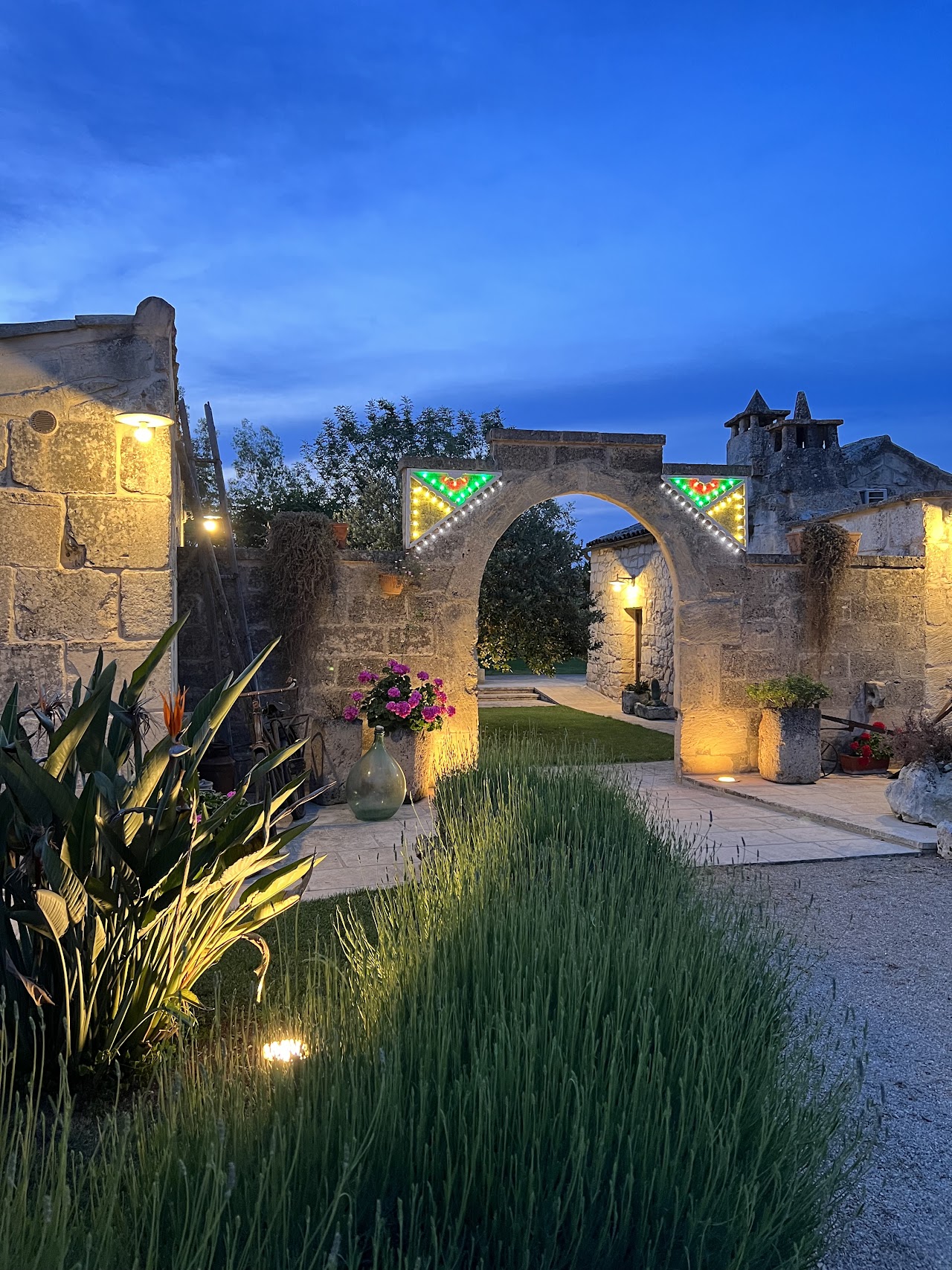
Salento lives two separate lives. One unfolds along crowded coastlines where tourist villages overlook white sandy beaches. The other, the real one, flows between stone masserie farmhouses, twisted olive groves and dry stone walls dividing the fields. Here, just kilometres from Puglia's most beautiful and least-known coves, you'll find B&Bs and rural properties where silence still matters and the loudest sound at dusk is crickets singing. This is the Salento worth your time.
The Adriatic coast: from Melendugno to Otranto
Start from Melendugno, on the Adriatic side of Salento. Its coastal villages, San Foca, Roca and Torre dell'Orso, are a few kilometres from the town: Torre dell'Orso is a wide sandy bay closed between two headlands, and at Roca there is the Grotta della Poesia, a natural pool carved into the rock at sea level. Here you'll find places that have stayed connected to the land: restored masserie, rooms set under old vaults, breakfasts made with what the garden and the nearby producers provide.
Further south, towards Torre dell'Orso and Otranto, the landscape turns wilder still. The B&Bs here still carry the names of the old contrade, and many keep their underground rainwater cisterns and the brick ovens where bread is baked. If you're here in late May or June, ask about the black Salento cherry harvest, small and intensely sweet. Carrying on along the coast as far as Castro you reach the Grotta Zinzulusa, one of the best known karst caves in Salento, opening onto the sea beneath a high cliff: here you swim from the rocks, not from sand.
The cooking in these masserie isn't the softened version served in tourist restaurants. Instead, you eat what locals eat: orecchiette with foraged turnip greens from adjacent fields, burrata made that morning at the village dairy, tiella rice and mussels, caciocavallo smoked over a wood stove. Over dinner, your host tells the masserie's story, often built in the 1700s as refuge from Barbary pirates. You drink local primitivo, not the supermarket version, but wine made by the farmers themselves.
Gallipoli and the Ionian coast
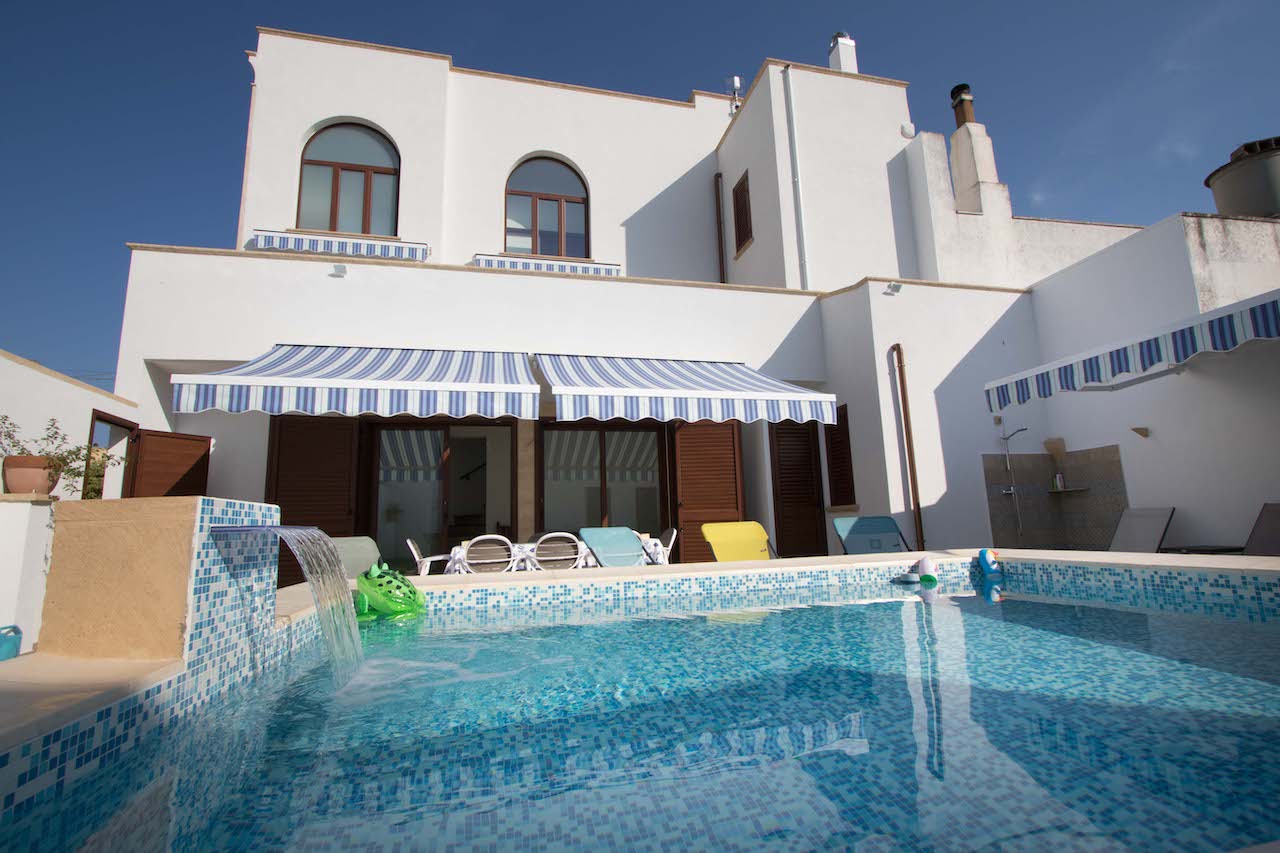
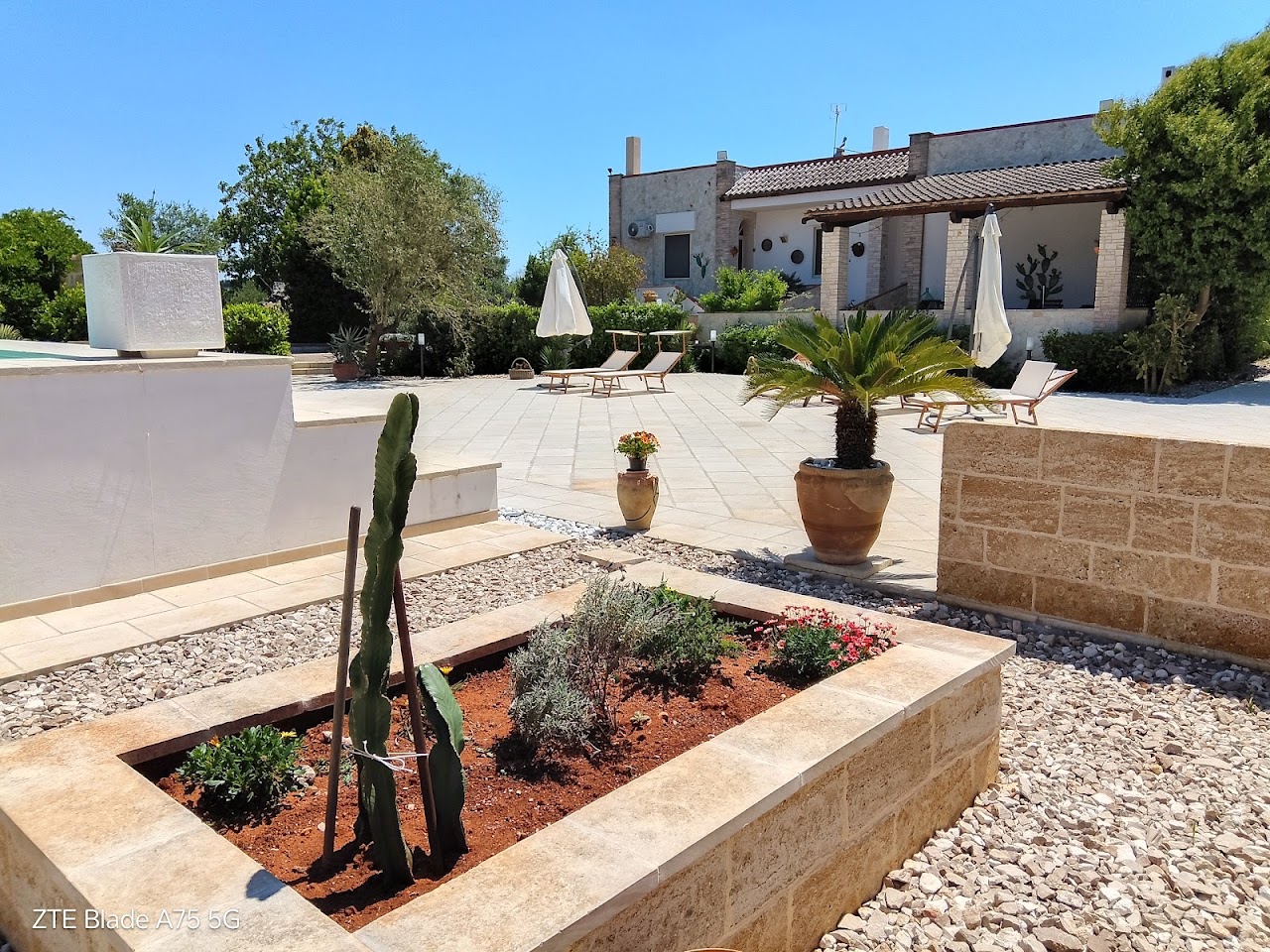
Gallipoli is the beach heart of the Salento Ionian coast: the old town on an islet, the sandy beaches to the north and south, and Baia Verde for those after some buzz. Those who prefer to stay outside the centre find, at Li Foggi, in the countryside south of Gallipoli towards Punta Pizzo, two houses from the same group: Villa Ortensia, a typical local-stone build with a shaded outdoor area and barbecue, and Villetta n. 8, larger, with two bedrooms, two bathrooms and two terraces, suitable also for those travelling with a dog.
Capo di Leuca and the lower Salento
At the tip of the peninsula, where the Ionian and the Adriatic meet, the pace slows and the coves turn wilder. In Castrignano del Capo, a short hop from Santa Maria di Leuca, Beb Cèsar is a handy base for sleeping where Puglia runs out. Just above, in Gagliano del Capo, Corte Stella Fedea sits among the old courtyards of the village, while in Racale, towards the Ionian coast, Don Vito is a holiday home made for families and longer stays.
Lecce and the coast
Lecce is not on the sea, but it is its cultural capital: the baroque of the old town and the Lecce marinas about twenty minutes away by car. Macalù is a design house near the sea, a good base for alternating evenings in the city with days on the beach.
When to go
Come between May and September, when coves stay quiet before the resort crowds arrive. Bring hiking boots if you want to reach the most hidden beaches, often reachable only on foot along coastal paths. Book at least three months ahead, especially for weekend stays in a masserie. Owners are farmers first and innkeepers second, so they keep numbers small and prefer guests staying at least three nights. Ask if they serve breakfast on request using garden produce, and whether you can help with seasonal harvests if you're lucky. This is the Salento that endures.