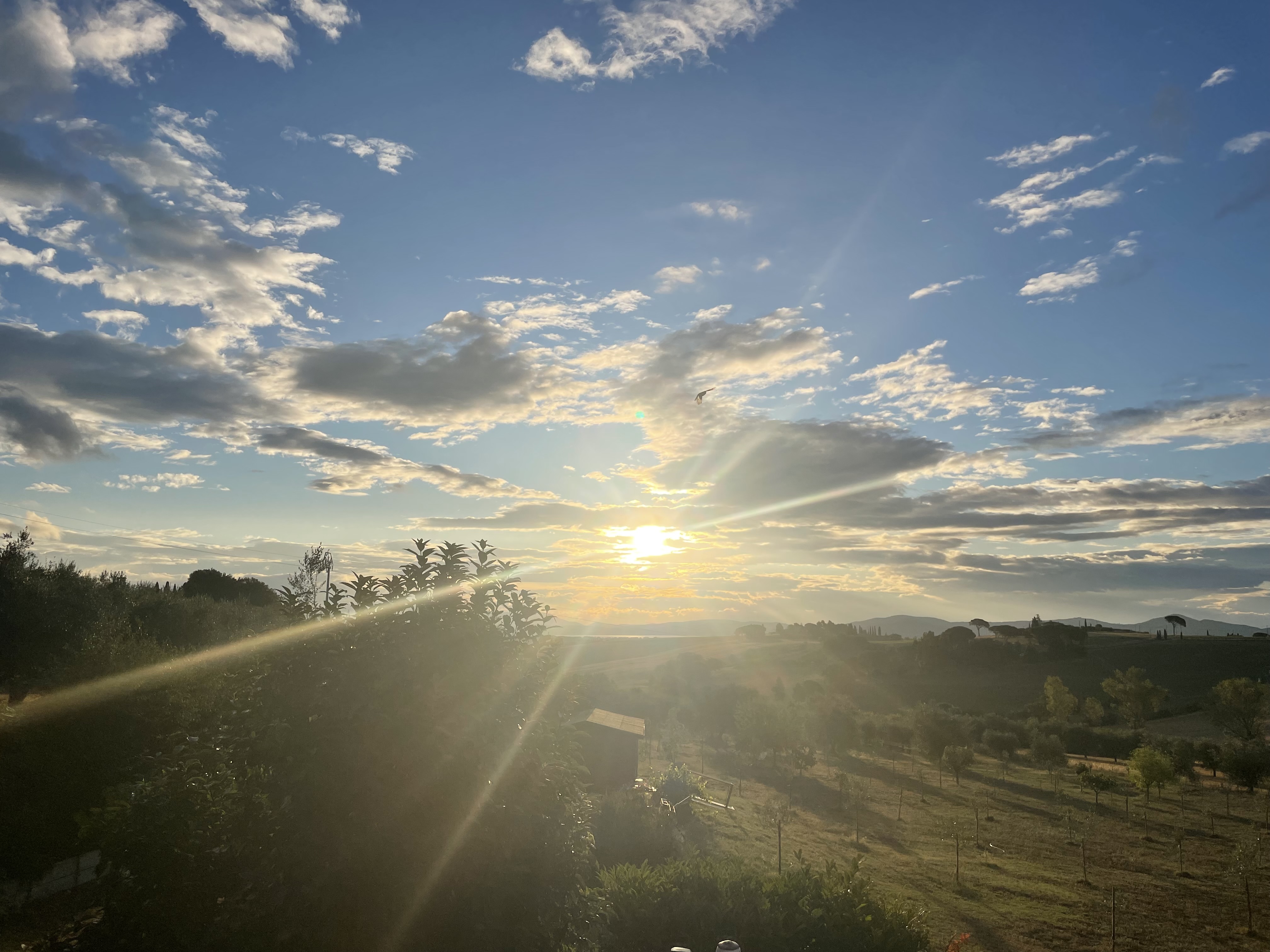
Umbria is the only region in peninsular Italy without a coastline. What might seem like a limitation has actually protected the region from coastal development, allowing its identity to flourish inland instead: rolling green hills, oak forests, river valleys, and medieval villages perched on every hilltop. It's called the green heart of Italy, and that's far more than marketing speak.

Umbrian villages pack a historical and artistic density that rivals any other Italian region. Assisi, Orvieto, Gubbio, Spoleto, Spello, Todi, Montefalco: each has its own distinct character, and any single one would justify a journey on its own.
Assisi

Assisi ranks among the world's most important pilgrimage destinations, birthplace of both Saint Francis and Saint Clare. The Basilica of San Francesco, featuring Giotto's magnificent fresco cycle depicting the saint's life, stands as one of Italy's greatest medieval artworks and has been a UNESCO World Heritage site since 2000. The lower and upper basilicas are stacked atop one another yet completely different in character: the lower basilica feels intimate and contemplative, while the upper basilica radiates light and narrative power.
Assisi's historic centre is built from the rosy stone of Mount Subasio, the mountain that dominates the skyline. Steep cobbled streets, medieval porticoes, and the Piazza del Comune with its first-century Roman Temple of Minerva (now a church) create an urban landscape of remarkable coherence. Though Assisi attracts many visitors, it hasn't lost its soul; arrive early in the morning or stay after the tour groups depart, and you'll experience an entirely different place.
Orvieto

Orvieto rises from a tufa plateau more than three hundred metres above sea level, visible from dozens of kilometres away. The Cathedral, begun in 1290 to house relics from the Miracle of Bolsena, features a Gothic facade encrusted with golden mosaics that ranks among Italy's finest.
Beneath Orvieto lies another city entirely: the underground network of tunnels, wells, and caverns carved by the Etruscans and expanded through the medieval period. Guided tours descend into the tufa and pass through spaces spanning from the Etruscan age to the Middle Ages.
The Pozzo di San Patrizio, built by Antonio da Sangallo the Younger in the sixteenth century, represents a marvel of Renaissance engineering: a double-helix well with two separate spiral staircases that allowed donkeys to descend with empty buckets and ascend with full ones without ever meeting. Few structures better illustrate the ingenuity of the Renaissance.
Gubbio

Gubbio is a grey stone medieval city built into the slopes of Monte Ingino. The Palazzo dei Consoli dominates the Piazza Grande with its imposing Gothic facade, one of the most monumental secular medieval buildings in Italy. The piazza itself, engineered into a rocky outcrop, represents one of medieval Italy's boldest urban solutions.
Every 15 May, Gubbio hosts the Corsa dei Ceri, one of Italy's most intense folk celebrations: three teams race enormous wooden candle-shaped structures up Monte Ingino to the Sanctuary of Sant'Ubaldo. Picture hundreds of kilos of wood being sprinted up a mountainside, with the entire city gripped by an intensity that's nearly impossible to grasp from outside.
Spoleto

Spoleto layers history upon history: Roman, Lombard, and papal. The twelfth-century Romanesque Cathedral, decorated with mosaics by Filippo Lippi and a mosaic-covered facade, counts among Umbria's finest. The Ponte delle Torri, a medieval aqueduct stretching two hundred thirty metres and rising eighty metres high, spans the gorge between the city and Monte Luco; walking across it offers a vertiginous view.
Spoleto also hosts the Festival dei Due Mondi, one of Europe's most significant festivals of music, theatre, and dance, held annually from late June through early July.
Spello

Spello is Umbria's most flower-draped village. The first-century Augustan walls remain nearly intact, and within them the streets overflow with flowering pots and climbing vines for much of the year. The Collegiata di Santa Maria Maggiore contains a chapel with Pinturicchio frescoes from 1501 of extraordinary refinement.
For Corpus Domini, Spello stages the Infiorata: the town centre's streets are completely covered with flower petal compositions created by competing neighbourhoods. It ranks among Umbria's most spectacular events.
Montefalco: Umbria's Balcony

Montefalco earns the nickname 'Umbria's balcony' for its hilltop position offering three-hundred-sixty-degree views across the Clitunno and Topino valleys, with Perugia, Assisi, Spello, and Foligno visible on the horizon on clear days.
The village is renowned for Sagrantino di Montefalco DOCG, one of Italy's most tannic and full-bodied red wines, produced from an indigenous grape cultivated only here. The San Francesco Museum Complex houses frescoes by Benozzo Gozzoli depicting Saint Francis's life with exceptional artistry.
Todi

Todi occupies three adjacent hills, each ringed by successive medieval walls that chronicle the city's development from the Umbrian age through the Middle Ages. The Piazza del Popolo ranks among Italy's best-preserved medieval squares, surrounded on all sides by the Palazzo del Capitano, Palazzo del Popolo, Palazzo dei Priori, and the Cathedral.
Todi has long appeared on international rankings of the world's most liveable cities, and its compact scale combined with full services and extraordinary landscape makes those rankings easy to understand.
Norcia and the Sibillini Mountains

Norcia, at the foot of the Sibillini Mountains, is the birthplace of Saint Benedict and Italy's capital of cured meat production. Norcia's protected designation of origin ham, sausages, and other charcuterie and cheeses rank among Italy's finest. The 2016 earthquake severely damaged the historic centre, including the Basilica of San Benedetto, and restoration work continues, but the village remains accessible and life has resumed.
The Piano Grande plateau above Norcia is famous for its lentil flowers in June: a high-altitude plain that transforms into a riot of colour in one of Italy's most stunning natural spectacles.
Practical Information
Getting there. Perugia airport offers direct flights from some European cities. By train, the Rome-Ancona line serves Assisi, Spello, Foligno, and Spoleto. For smaller villages, a car is essential.
When to visit. Spring and autumn offer ideal conditions. Summer brings crowds to Assisi. Head to Norcia in June for the flower bloom. Spoleto is best during the festival in July.
✓ Assisi: visit the Basilica of San Francesco early morning, before the tour groups arrive.✓ Gubbio: if you're here on 15 May, the Corsa dei Ceri alone justifies the trip.✓ Orvieto: book the underground tour in advance; places are limited.✓ Castelluccio di Norcia: the flower bloom shifts by a few weeks each year, so check online before you travel.