Choose your stay and contact the host directly to get a better deal than on the big booking sites.Browse stays →
Sicilia · Villages
Baroque Towns and Cities of Sicily: Complete Guide
06 giugno 2026·6 min di lettura
Sicily has a longer and more complex history than almost anywhere else in Europe. Greeks, Romans, Arabs, Normans, Swabians, Aragonese, Spanish; each wave of conquest left its mark on the island's towns and cities, and these layers often coexist within the same building, the same square, the same facade. The result is an urban landscape unlike anywhere else in Italy.
Sicily's UNESCO sites rank among the Mediterranean's most significant: the Arab-Norman architecture of Palermo, Cefalù and Monreale, the late baroque cities of Val di Noto, the archaeological park of Agrigento with the Valley of the Temples. Add Taormina, which ranks among Europe's top twenty destinations for international tourists in 2026.
Following the 1693 earthquake that devastated much of eastern Sicily, the affected cities were rebuilt in a single style: Sicilian late baroque, featuring elaborate facades, balconies with sculpted corbels, and monumental squares. This collection of towns is now a UNESCO site and represents one of Europe's most coherent examples of baroque architecture.
Noto is considered the capital of Sicilian baroque. The city was completely rebuilt on a new site after the earthquake, following a rational urban plan. The Corso Vittorio Emanuele unfolds as a succession of churches and palaces in honey-coloured stone that shifts tone with the day's light. The Cathedral of San Nicolò, with its sweeping staircase and three-tiered facade, ranks among Italy's most photographed baroque buildings.
On the coast near Noto, in Avola, Casavacanza villa dell'artista makes a quiet base for visiting Noto without staying in its busiest centre.
Ragusa Ibla is the historic core of Ragusa, clinging to a rocky spur and separated from the modern city by a drop of more than a hundred and twenty metres. Narrow streets, baroque churches, noble palaces and viewpoints across the Ibleo landscape make it one of Sicily's most enchanting towns. Piazza del Duomo with the Church of San Giorgio forms the city's heart.
Modica is famous across Europe for its chocolate, produced using a recipe of Aztec origin transmitted by the Spanish: no butter, no milk, ground cold. But Modica is also a baroque city of considerable beauty, built in a valley between two hills with houses clinging to rocky walls.
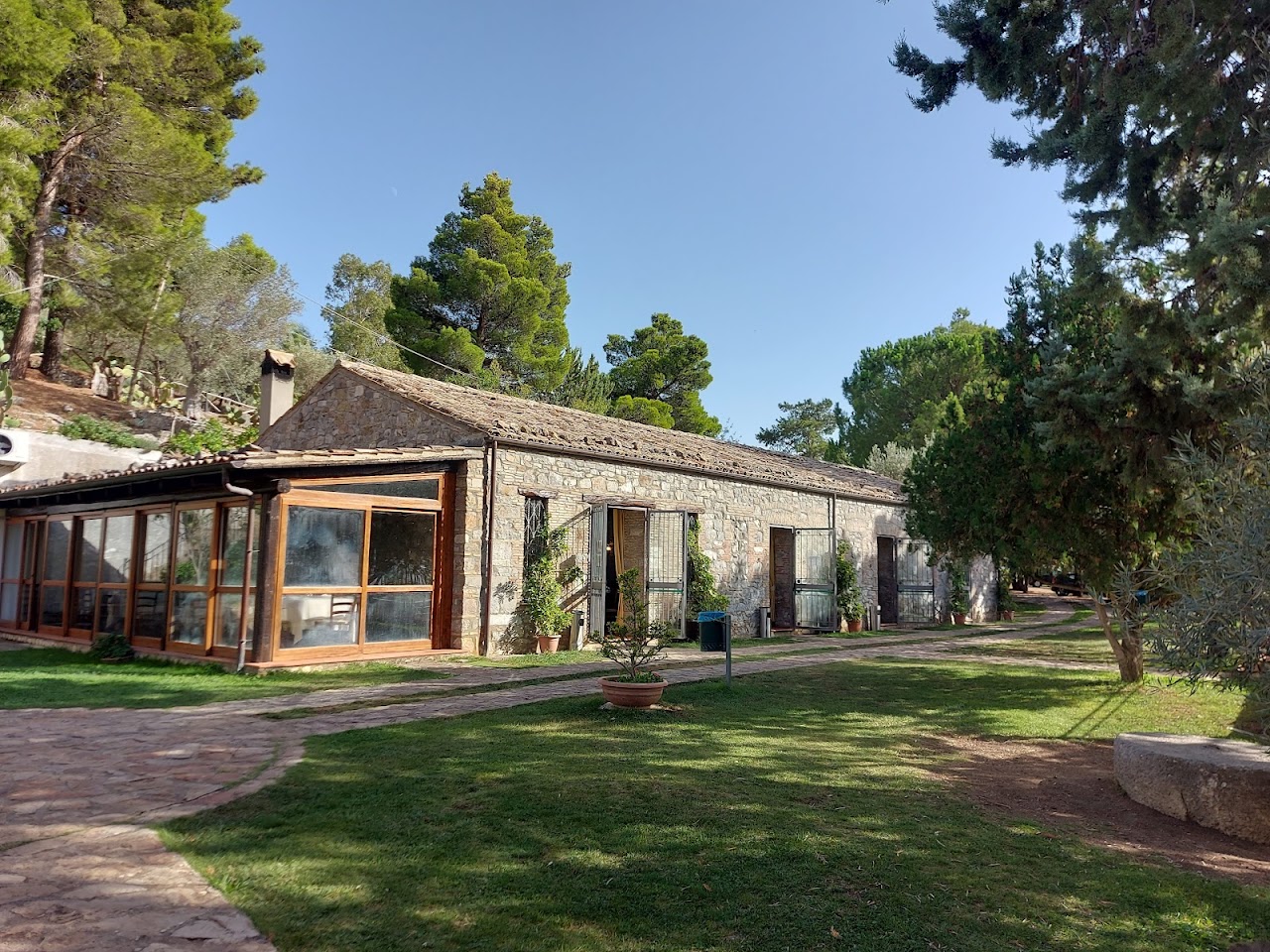
Those who want to stay in town have Casa Catalè, a guesthouse in Modica. Those who prefer the countryside can look at Dimore del monte, two independent villas in a 1948 stone property with a pool and a fenced garden in Contrada Marchesa, 10 km from Modica and 18 from Ragusa Ibla.
Scicli is the least known of the group but perhaps the most authentic. Less touristy than Noto and Ragusa, it sits at the confluence of three rocky valleys, with cave dwellings carved into limestone cliffs and a main street lined by palaces with sculpted balconies. Fans of the Montalbano detective series will recognize Scicli's town hall as the police station from the show.
Syracuse turns on two poles: Ortigia, the Greek and baroque island heart wedged between two harbours, where the Cathedral is built inside a temple to Athena, and the mainland around the Neapolis Archaeological Park, with the Greek Theatre and the quarries. Staying near Neapolis suits those getting around by car who still want Ortigia a couple of kilometres away, reachable on foot too.
In that area, a short walk from the Archaeological Park, Affittacamere Il Terrazzo di Archimede has four rooms and serves breakfast on request on its large terrace, while Epipoli23 is an apartment for up to five with private parking, handy for families or groups.
Taormina
Taormina has been a continuous tourist destination since the Grand Tour put it on the map in the eighteenth century. In 2026 it ranks among Europe's top twenty destinations favoured by international tourists, alongside Cefalù.
Taormina's Greek Theatre, built in the third century BC and transformed by the Romans into an amphitheatre, stands among the world's best-preserved ancient theatres. Its defining feature is the view: from the cavea you see the Ionian Sea and, behind it, Mount Etna. In summer the theatre hosts concerts and performances.
Taormina's historic centre is a pedestrian course, the Corso Umberto, running through the town from one medieval gate to another. You walk past shops, bars, restaurants and sea-facing viewpoints. At the foot of Taormina lies the Isola Bella bay: the cable car goes down to Mazzarò and from there the beach is a short walk, or you can walk down from the centre.
Cefalù
Cefalù is the Sicilian town most beloved by European tourists. A UNESCO site for its Arab-Norman Cathedral, built by Norman king Roger II in the twelfth century, with Byzantine mosaics decorating the apse and presbytery. The interior ranks among Sicily's finest.
Cefalù's compact historic centre is entirely walkable: the waterfront, Piazza del Duomo, the medieval quarter's alleyways, the Rocca dominating the town from above with the remains of the so-called Temple of Diana, a megalithic structure far older than the Greek period. The sandy beach lies just steps from the centre.
Cefalù sits on Sicily's northern coast, roughly seventy kilometres from Palermo, and is easily reached by train.
Palermo
Palermo is a complex, chaotic, extraordinary city. Capital of the Norman kingdom in the twelfth century, it was then one of the Mediterranean's largest and most cosmopolitan cities. The Palatine Chapel, within the Palace of the Normans, is a masterpiece of Arab-Norman art: golden mosaics, Islamic stalactites, ancient columns, all within the same space.
Palermo's Cathedral, the Martorana, the Magione: Palermo holds a concentration of Norman churches with golden mosaics unmatched in Europe. The Arab-Norman complex of Palermo, Cefalù and Monreale has been a UNESCO site since 2015.
Palermo's historic markets, Ballarò and la Vucciria, rank among Italy's most vibrant and authentic neighbourhood markets: fish, vegetables, street food, noise, colours. Caponata, pani ca meusa, sfincione, arancini: Palermo's street food culture ranks among Italy's finest.
Erice
Erice rises 750 metres above sea level on its namesake mountain, overlooking Trapani, reached by cable car. It is a medieval town frozen in time, often wrapped in mist that locals call 'Venus's kiss'. The streets are stone-paved, the houses built of stone, the Castle of Venus dominates the valley below.
The cable car up to Erice leaves from Trapani, and right in the town's old centre you will find Terramare, a convenient base for going up to the hill town and exploring the whole west of the island.
From Erice's summit, on clear days, you see the Egadi Islands and, with favourable conditions, the coasts of Tunisia. The town is small and visited in a few hours, but the combination of position, atmosphere and landscape makes it one of western Sicily's most distinctive stops.
Practical Advice
Spring and autumn are the best seasons for visiting the interior towns: mild temperatures, excellent light for photography, no crowds. Noto and Ragusa Ibla in May, with almond blossoms in the background, rank among Sicily's most beautiful landscapes.
Summer is the right season if you want to combine towns and sea. Taormina and Cefalù are lively, theatres and festivals are active, but temperatures in July and August in the interior can be intense.
How to get around. A car is almost essential for exploring Val di Noto independently: the cities are close to each other but bus connections are slow. For Taormina and Cefalù, trains work well from eastern Sicily and from Palermo respectively.
Noto at sunset: the honey-coloured stone of the Corso glows with warm light in the late afternoon. Book Palermo's Palatine Chapel in advance: access is limited and sells out in season. Modica chocolate is best bought directly from producers in the historic centre; look for those without added vegetable fats. Erice: take the cable car up and walk down towards Trapani for the views.