Choose your stay and contact the host directly to get a better deal than on the big booking sites.Browse stays →
Campania · Sea & beaches
Campania's Beaches and Coastline: Complete Travel Guide
06 giugno 2026·5 min di lettura
Campania boasts one of Italy's most varied and dramatic coastlines. Across nearly five hundred kilometres of shoreline, you'll find landscapes that exist nowhere else in combination: the UNESCO-listed Amalfi Coast with villages clinging to cliffsides, the volcanic islands of the Gulf of Naples, the unspoilt beaches of Cilento, Ischia's thermal springs, and Capri's hidden coves. Everything is accessible from Naples, one of southern Italy's major airport hubs.
Campania's coast comes with varying price tags. The Amalfi Coast and Capri rank among Italy's priciest destinations during peak season. Yet Campania also offers the Cilento, where costs are substantially lower and beaches rival the Mediterranean's finest.
The Amalfi Coast stretches between Positano and Vietri sul Mare along the southern face of the Sorrentine Peninsula. UNESCO-designated since 1997, it ranks among the world's most photographed coastal destinations.
The road threading through it, the SS163, counts among Italy's most spectacular drives: narrow, serpentine, with the sea below and mountains above. It's unsuitable for those prone to vertigo or for navigating heavy July and August traffic. Villages are also reachable by sea; ferries and hydrofoils depart from Salerno and Naples for Positano, Amalfi, and other settlements.
Positano is the most famous village, with pastel-coloured houses cascading toward the sea and the Spiaggia Grande beach. Expensive and crowded in summer, it remains one of Italy's most instantly recognisable coastal scenes.
Amalfi is the city that lends its name to the coast, centred on its Arab-Norman Cathedral overlooking the main square. It serves as a practical hub for exploring the coastline by water.
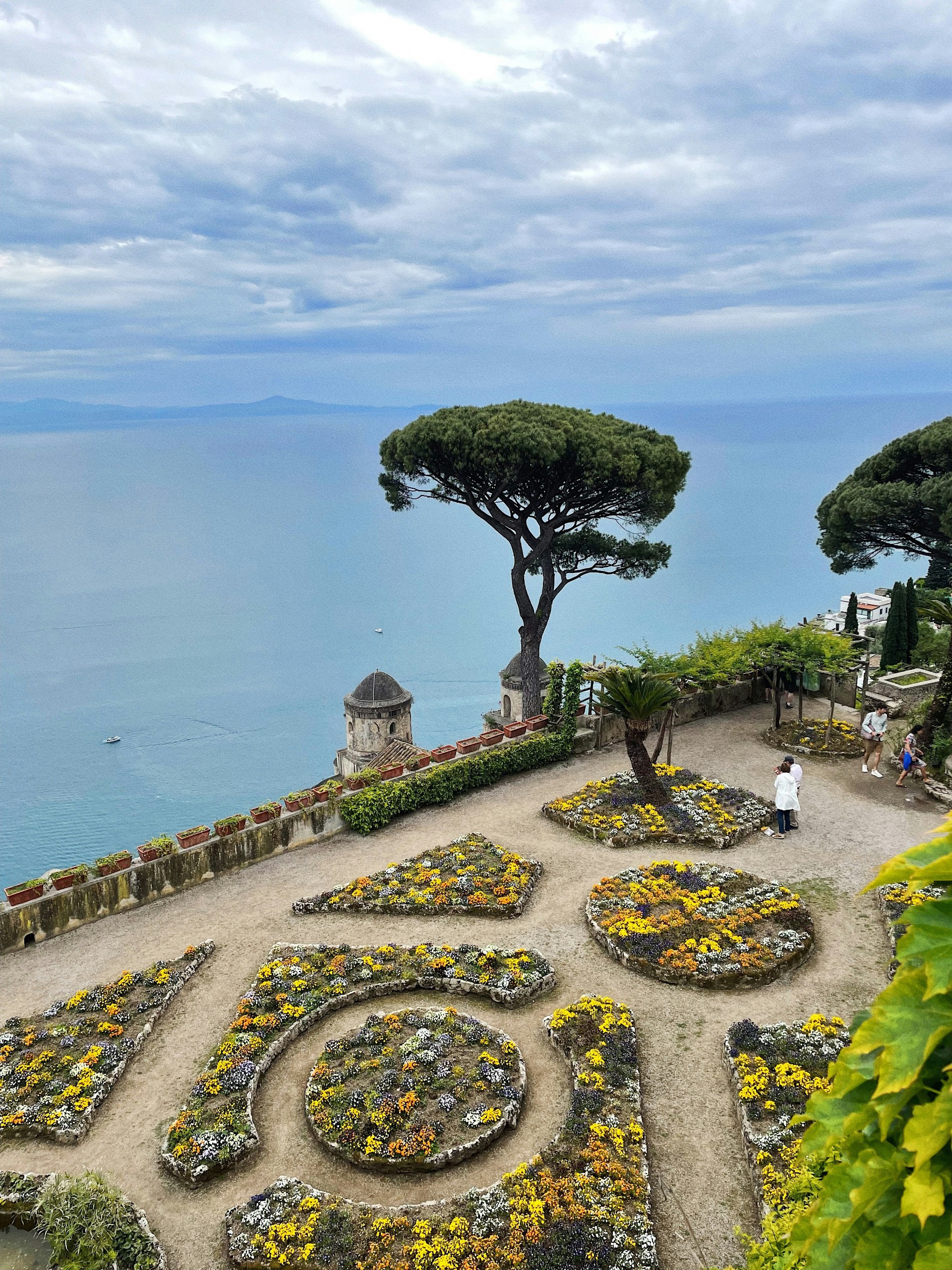
Ravello sits inland above Amalfi, home to historic villas and gardens with panoramic sea views. Villa Cimbrone and Villa Rufolo rank among Italy's finest viewpoints. It hosts an internationally acclaimed summer music festival annually.
Atrani is Italy's smallest municipality by area and one of the coast's least crowded villages: a small piazza directly on the water, narrow lanes, minimal crowds. It's worth stopping to see how the evening light transforms it.
Capri is a ten-square-kilometre island in the Gulf of Naples, home to some of the world's most recognisable coastal landscapes. The Blue Grotto, the Faraglioni rock formations, Capri's main square: these images have circulated for a century.
The island is small enough to explore on foot or by taxi. Private tourist cars are prohibited; leave your vehicle in Sorrento or Naples and take the hydrofoil. The finest coves are reached by sea, swimming, or pedalo.
Capri is expensive. Restaurants, hotels, and shops charge luxury destination rates. Those wanting to see Capri without spending an entire week's budget can make a day trip from Naples or Sorrento with a packed lunch.
Ischia and Procida
Ischia is the largest island in the Gulf of Naples and most suitable for families. It offers sandy beaches, shallow waters, natural hot springs, and hotels with thermal pools. Ischia's thermal waters have been renowned for centuries; the Aragonese Castle dominates the island from a high promontory. The best beaches are San Montano and San Pancrazio.
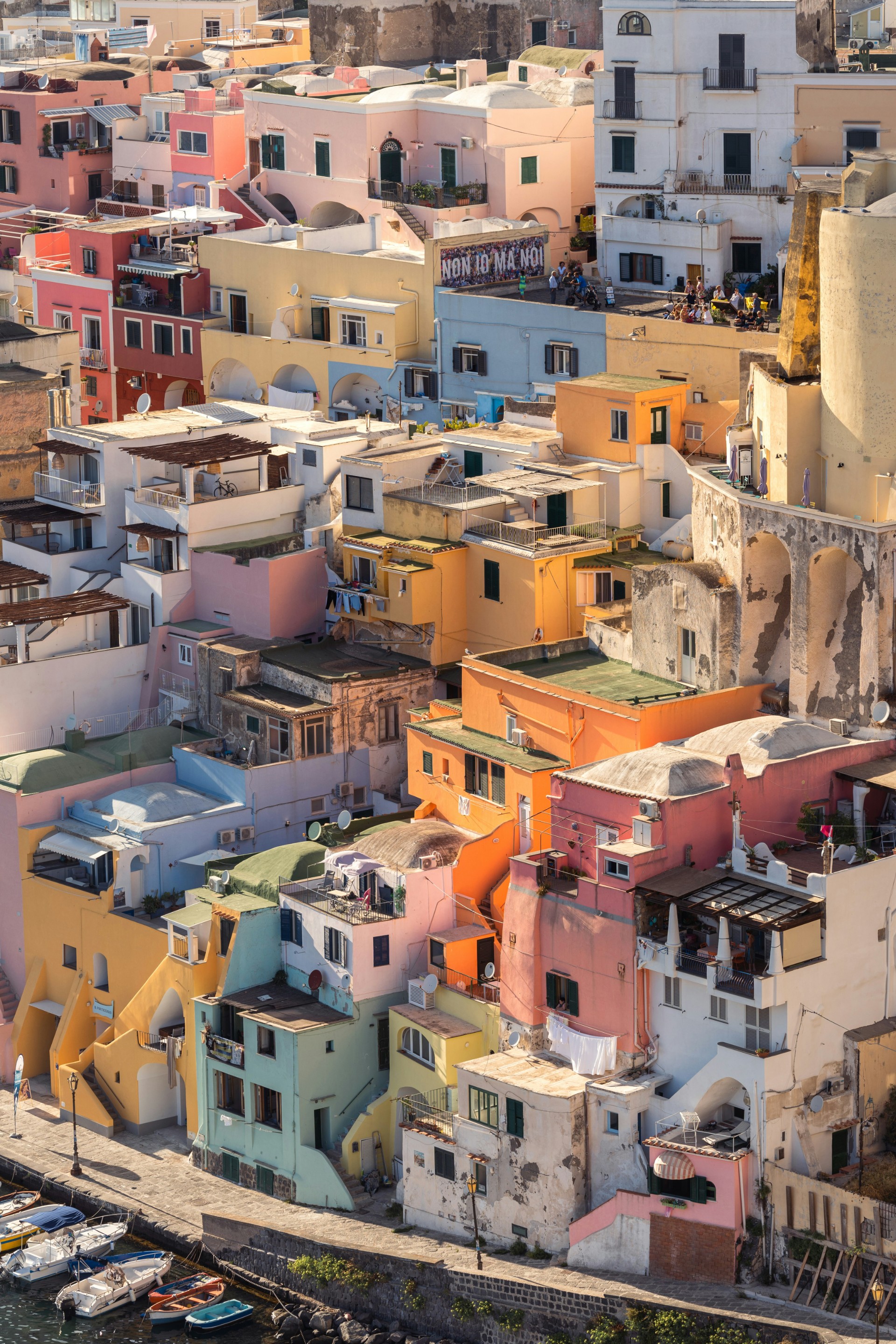
Procida is the smallest island and the most authentic. Named Italian Capital of Culture in 2022, it has resisted mass tourism better than Capri and Ischia. Corricella, a fishing harbour with pastel-coloured houses reflected in the water, ranks among Campania's most photographed spots. The dark volcanic sand beaches are unusual and striking.
Both islands are reached by ferry or hydrofoil from Naples, Pozzuoli, and Ischia itself. Services run frequently during the season.
Cilento
Cilento is Campania's least known and most affordable coastline, occupying the region's southern section. It forms part of the Cilento, Vallo di Diano and Alburni National Park, UNESCO-designated for its cultural landscape.
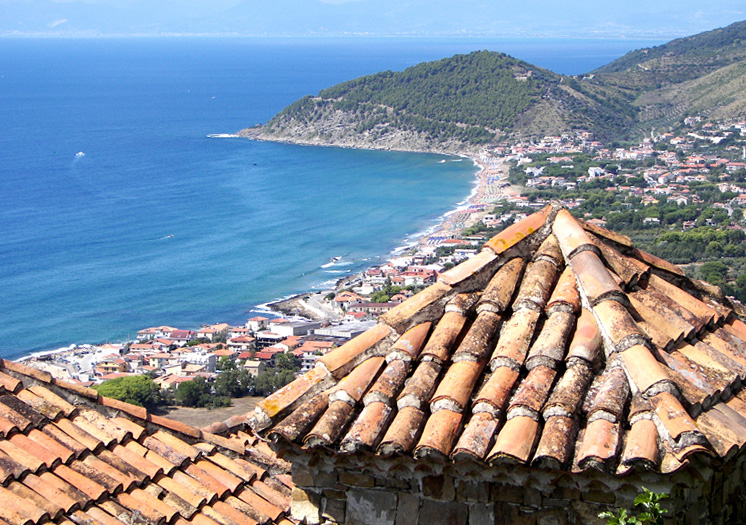
Cilento's beaches alternate between white cliffs and long stretches of fine sand. Palinuro, with its promontory and sea caves, serves as the coast's main reference point. The waters are clean and the seabed rich in marine life for snorkellers.
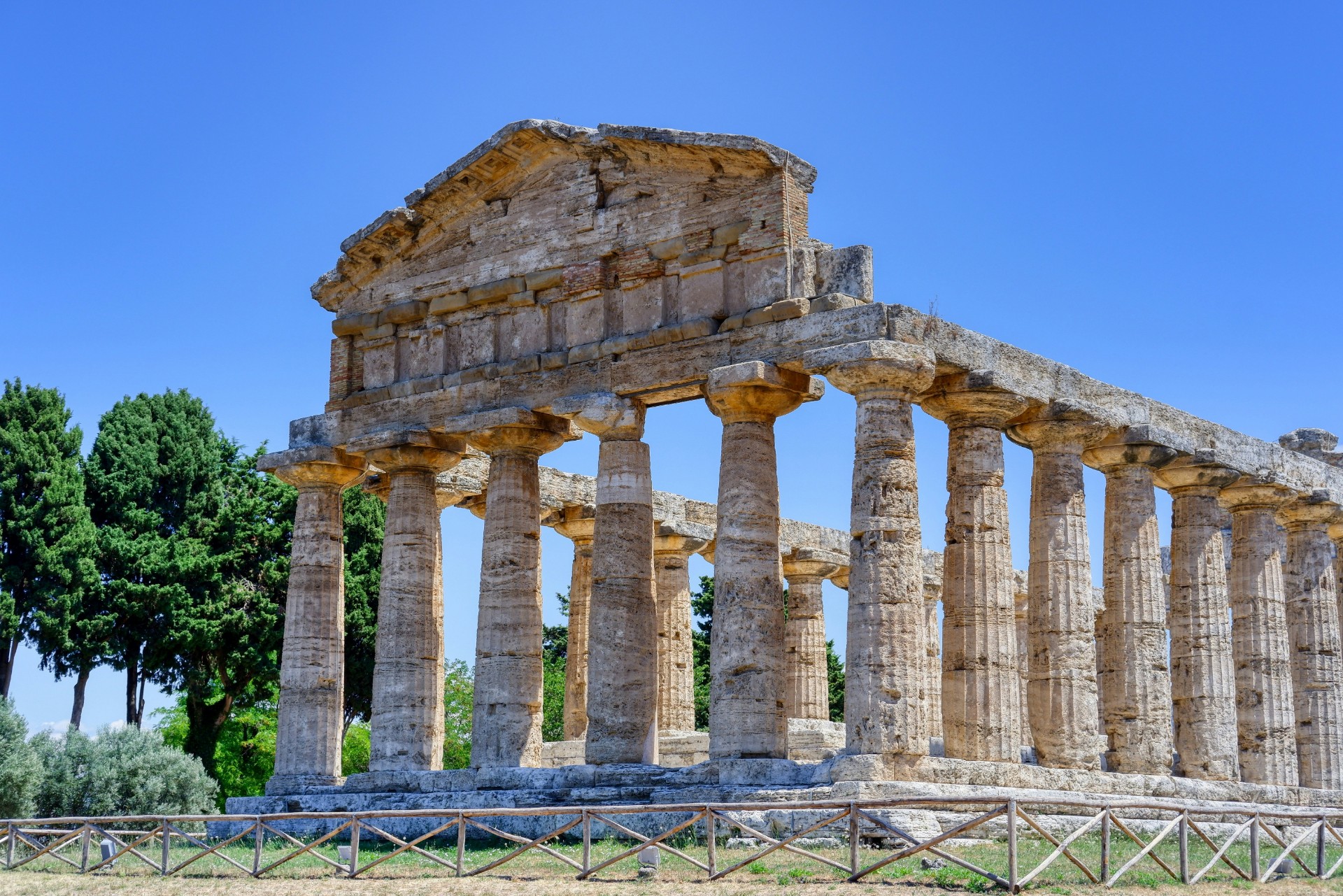
At Paestum, near the Cilento coast, stand three Greek temples from the fifth and sixth centuries BC, among the world's best preserved. They can be visited in a few hours and easily combined with a beach day.
Compared to the Amalfi Coast and islands, Cilento offers substantially lower prices and attracts primarily Italian visitors. For quality sea and beaches without the crowds and costs of upper Campania, it's the right choice.
Where to stay in the southern Cilento depends on the holiday you want. Marina di Camerota is the handiest base for the coves reached by boat, from Baia degli Infreschi to Cala Bianca. Here La Mansarda di Mary is a loft apartment with exposed beams and a terrace, 450 metres from Calanca beach, while Il Rifugio di Arcangelo is in the old centre, set over several levels, with the first beach 250 metres away: suited to couples and families with one or two children.
Still in Marina di Camerota, Piccolo Amore is a studio in the old centre, a few steps from Calanca beach and the seafront, designed for two people travelling together. PoseidonRooms is a newly built B&B, with breakfast and a beach spot at a partner lido included in the price.
Those who prefer the hill village can go up to Camerota, where Terrazza sul Borgo sits fifty metres from the old town, with a terrace looking over the sea and the rooftops of the historic centre. In Palinuro, set in the Mediterranean scrub and a few steps from the sea, Hotel villaggio Tabù is a small family-run hotel, with its little bar square and home cooking.
Getting There and Getting Around
Naples Capodichino Airport offers direct flights from numerous European cities. From Naples:
Amalfi Coast: ferry or hydrofoil from Naples or Salerno, or by car (though summer traffic is heavy).
Capri: Circumvesuviana train from Naples to Sorrento (roughly one hour), then hydrofoil to Capri (twenty minutes).
Ischia and Procida: ferry from Naples Mergellina or Pozzuoli.
Cilento: train from Naples to the stations of Agropoli-Castellabate and Pisciotta-Palinuro.
When to Visit
May, June, and September are ideal months. The sea is warm, beaches are enjoyable, prices are lower than peak season, and roads are less congested. July and August on Capri and the Amalfi Coast bring queues, high prices, and difficult bookings.
Cilento works well into October: beaches are nearly empty, the sea remains warm, and the landscape is extraordinary.
✓ Amalfi Coast: use ferries instead of driving to avoid traffic and see the coast from the water.✓ Capri outside peak season (May or September) is far more pleasant than August.✓ Procida: book ahead; it has limited accommodation and fills quickly in season.✓ Cilento: combine Paestum and one of Palinuro's beaches in the same day.